


Family Tree of Christian Denominations
Family Tree of Christian Denominations
Couldn't load pickup availability
 14-day Refund
 Download fast
 Editable file


Inspired by the extraordinary breadth and depth of the Christian religion, the Family Tree of Christian Denominations presents all the major denominations and numerous minor branches in one connected tree showing the development of Christianity over the last 2,000 years.
Beginning with the religious milieu of Second Temple Judaism and the public teaching of Jesus of Nazareth, the Family Tree moves to the Apostolic Age and the era of Pre-Nicene Christianity when doctrines, creeds, the canon of scripture and the hierarchy of the Church were being developed.
After the early Church Councils and the development of the Pentarchy, we see, after the Great Schism of 1054, the development of the Catholic and Orthodox Churches.
The next great period begins with the Protestant Reformation and then the spread of Christianity to the New World. And then moving into the 20th and 21st centuries, a greater and greater diversity of beliefs and practices emerge.
With over 500 current and over 200 former denominations across 18 major denominational groups, there's much to explore.

Digital Download
This product is an instant digital download. No physical product will be received. Due to the physical size of the Family Tree, it is designed for digital viewing and is not intended as a printable poster.
Colours may vary due to differences in screen calibrations.
Download Contents
File Name: Family Tree of Christian Denominations
File Type: .xlsx (MS Excel spreadsheet)
File Size: 22.7MB
WHAT'S IN THE FAMILY TREE?
WHAT'S IN THE FAMILY TREE?
There are more than 500 current and more than 200 former denominations in the Family Tree of Christian Denominations.
They are included in the following groupings:
● Jewish
● Early Christian
● Catholic
● Eastern Orthodox
● Oriental Orthodox
● Church of the East
● Lutheran
● Anglican
● Reformed
● Methodist
● Holiness
● Anabaptist
● Baptist
● Pentecostal
● Charismatic
● Non-Nicene
For each denomination, the following details are given:
● Name as it is commonly known
● The year of establishment or independence
● The name of the founder if known
● The number of adherents or congregations if known
● The symbol or logo of the denomination
SYSTEM REQUIREMENTS FOR THIS FAMILY TREE
SYSTEM REQUIREMENTS FOR THIS FAMILY TREE
Software:
The Family Tree of Christian Denominations has been created using MS Excel.
For the best user experience the family tree should be viewed and edited using Excel.
Due to the size of the family tree, the viewing experience using the free online version of Microsoft Excel may be limited due to internet connection speed.
A free alternative to MS Excel is LibreOffice available for both PC and Mac computers.
Devices:
For the best experience, the family tree should be viewed on a laptop or desktop screen.
The family tree can also be opened on Apple and Android tablets and phones.
However, please be aware that on a small screen, such as a phone, the viewing experience may be limited.
FREQUENTLY ASKED QUESTIONS
FREQUENTLY ASKED QUESTIONS
Can I still use the product if I don't have Excel?
To enjoy the full features of the family tree it is recommended you use the Excel desktop app which is part of Microsoft Office/Microsoft 365.
Mac users can use Excel for Mac.
A free alternative to MS Excel is LibreOffice available for both PC and Mac computers.
Do I need to have the most up to date version of excel?
If you have Microsoft Excel 2007 for PC or later, or Excel 2011 for Mac or later, you can use all the features of the family tree.
Do I need to be an expert in excel to be able to use the products properly?
The Family Tree of Christian Denominations is very easy to use.
Navigation instructions are included to help you move around family tree, but if you can use a mouse or touchscreen, you’re good to go.
Where do I find the instructions on how to use the Family Tree of Christian Denominations?
Instructions are included as part of the family tree as a separate tab in the file.
Can I add my own entries to the Family Tree?
Yes, the Family Tree of Christian Denominations will come to you as an editable file, so you can add as many new entries as you like.
Can I trust the quality of the information in the Family Tree?
Yes, all entries have been fact checked to the best of the creator’s ability.
If however, you do find an error of any kind we would really appreciate you pointing it out to us.


Snapshots of selected areas of the Family Tree
The Vision of Constantine
A turning point in Roman and Christian history. Constantine’s reported vision before the Battle of the Milvian Bridge and his subsequent support for Christianity marked a significant shift in the religion’s public status. From imperial toleration to increasing patronage, this period helps explain how Christianity moved from the margins of the Roman world into its political and cultural centre.

The Catholic Church
From the early Christian communities of the Roman world to a global institution, the Catholic Church has played a central role in shaping religious, cultural, and political history. Papal authority, councils, and theological development helped define doctrine and practice, while the Church’s reach extended through monasteries, education, art, and law across centuries and continents.

Eastern Orthodoxy
Rooted in the Christian traditions of the Eastern Roman (Byzantine) world, the Eastern Orthodox Church developed along distinct theological, liturgical, and cultural lines. Shaped by the early ecumenical councils and the legacy of Constantinople, it preserved ancient forms of worship and a strong emphasis on continuity, tradition, and the shared life of the Church across many cultures.

Protestant Reformation
Beginning in the early sixteenth century, the Protestant Reformation challenged the authority and practices of the medieval Church. Figures such as Martin Luther, John Calvin, and others called for theological reform, greater emphasis on scripture, and changes to church governance. The movement led to lasting divisions within Western Christianity and the emergence of numerous Protestant traditions.

Anabaptists
Emerging during the Radical Reformation of the sixteenth century, the Anabaptists rejected infant baptism in favour of adult, voluntary faith. Often persecuted by both Catholic and Protestant authorities, these communities emphasised discipleship, separation from state power, and close-knit congregational life. Their legacy continues in groups such as the Mennonites, Amish, and Hutterites.

Charismatic Evangelicals
Developing primarily in the twentieth century, Charismatic Evangelical movements emphasise personal conversion, active faith, and the work of the Holy Spirit in everyday life. Practices such as contemporary worship, healing, and spiritual gifts feature prominently, alongside a strong focus on evangelism and global missionary activity.

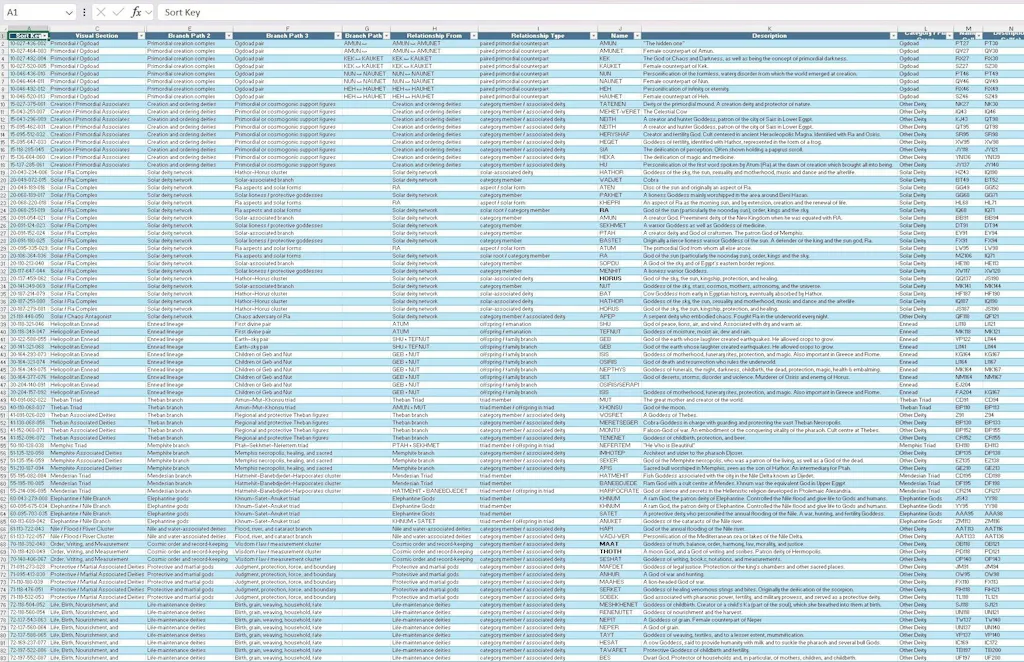
Image Attribution: All images sourced from Wikimedia Commons